Mid-market companies are often in the hardest stage of performance management maturity.
They are too large for informal processes, spreadsheets, and manager-by-manager performance habits. But they may not want the cost, complexity, or long implementation cycle of a heavy enterprise HCM system.
The result is a familiar gap.
Goals are tracked in one place. Reviews happen somewhere else. Check-ins are inconsistent. Development plans may exist, but they are not always connected to performance outcomes. Managers are expected to coach, but not always supported in the moments that matter. Leaders need visibility, but the data is scattered across systems.
This is where the right performance management software becomes critical.
For mid-market companies, performance management software should not be just a review tool. It should be a connected system that helps organizations align goals, run better performance conversations, support managers, develop employees, recognize contribution, and give leaders real-time visibility into what is happening across the workforce.
The best systems help companies move from annual review administration to continuous performance growth.
That shift matters because modern performance management is not just about evaluating employees.
It is about helping them grow.
Why Mid-Market Companies Need a Different Performance Management Approach
Mid-market organizations usually face a very specific set of challenges. They have grown beyond small-company informality. There are more managers, more teams, more locations, more reporting needs, and more pressure to standardize the employee experience.
At the same time, they may not have the same HR infrastructure, implementation bandwidth, or change-management capacity as a large enterprise. This creates a difficult balance. HR needs structure, but not unnecessary complexity. Managers need guidance, but not another system that slows them down. Employees need feedback, but not only once a year. Leaders need visibility, but not another manually assembled report.
A strong performance management platform should solve these realities, not add to them. For mid-market companies, the goal should be simple: Build a performance management system that is structured enough to scale, flexible enough to adapt, and practical enough for managers and employees to actually use.
Common Performance Management Challenges in Mid-Market Companies
Before evaluating software, it helps to understand where performance management usually breaks down. In many organizations, performance management problems are not caused by lack of intent. They are caused by disconnected processes.
Common challenges include:
- Time-consuming administration
- Goals not tied to business priorities
- Poor feedback quality
- Development not linked to reviews
- Data scattered across systems
- Inconsistent competency measurement
- Annual reviews only
- Limited leadership visibility
- Employees feeling disconnected
- Global consistency gaps
These issues are not isolated. They reinforce each other.
When goals are disconnected from business priorities, reviews become less meaningful. When feedback quality is poor, employees do not know how to improve. When development is not linked to reviews, performance conversations do not lead to growth. When data is scattered, leaders cannot see what is working or where risk is building.
That is why mid-market companies should look for performance management software that connects the full performance experience, not just one part of it.
What to Look for in Performance Management Software
The right performance management software should help your organization create alignment, feedback, coaching, development, recognition, and visibility in one connected system.
Here are the most important capabilities to evaluate.
1. Goal Management and OKRs
Performance management starts with alignment.
Employees need to understand what matters, how their work connects to business priorities, and how success will be measured. Without clear goals, performance conversations become subjective and disconnected.
Mid-market companies should look for software that supports:
- Individual goals
- Team goals
- Departmental goals
- Organizational goals
- Goal progress tracking
- OKRs, if your organization uses them
- Visibility into how goals connect across levels
Goal Management and OKRs help turn strategy into execution. They give employees clarity and give leaders a way to see whether work is aligned with business priorities. Without this layer, performance management becomes a backward-looking review process. With it, performance becomes a continuous alignment system.
2. Performance Reviews With 360 Feedback
Performance reviews still matter, but they need to be more useful than a once-a-year form.
Modern performance management software should support structured performance reviews that are configurable, consistent, and connected to the rest of the employee development process.
Look for features such as:
- Configurable review templates
- Review workflows
- Manager and employee reviews
- Peer feedback
- 360-degree feedback
- Approval routing
- Review reminders
- Documentation and review history
- Reporting on review completion and outcomes
360 feedback is especially valuable because performance is rarely visible from only one angle. Peers, managers, cross-functional partners, and employees themselves can all provide useful context.
The goal is not to make reviews longer. The goal is to make them more complete, more balanced, and more useful for development.
3. 1:1 Check-Ins and Continuous Feedback
Annual reviews alone are not enough.
Employees need regular conversations about progress, priorities, challenges, and growth. Managers also need structured ways to stay connected throughout the year instead of waiting until review season.
That is why 1:1 check-ins should be a core part of any modern performance management system.
Strong check-in functionality helps organizations:
- Encourage more frequent manager-employee conversations
- Capture feedback throughout the year
- Track progress against goals
- Surface issues earlier
- Support better documentation
- Make performance conversations less reactive
Continuous feedback helps reduce surprises during formal reviews. It also gives employees a clearer sense of where they stand and what support they need.
For mid-market companies, this is especially important because manager habits can vary widely across teams. A check-in system creates more consistency without making the process feel overly rigid.
4. AI Coaching for Managers
Manager effectiveness is one of the biggest performance management gaps.
Many managers are expected to coach employees, give feedback, handle difficult conversations, and support development, but they are not always trained or confident in those moments.
This is where AI coaching becomes a major differentiator.
Performance management software for mid-market companies should not only track manager activity. It should help managers lead better.
AI coaching can support managers with:
- Feedback preparation
- Performance conversation guidance
- Communication support
- Development discussion prompts
- Coaching recommendations
- Team communication insight
- Early support before issues escalate
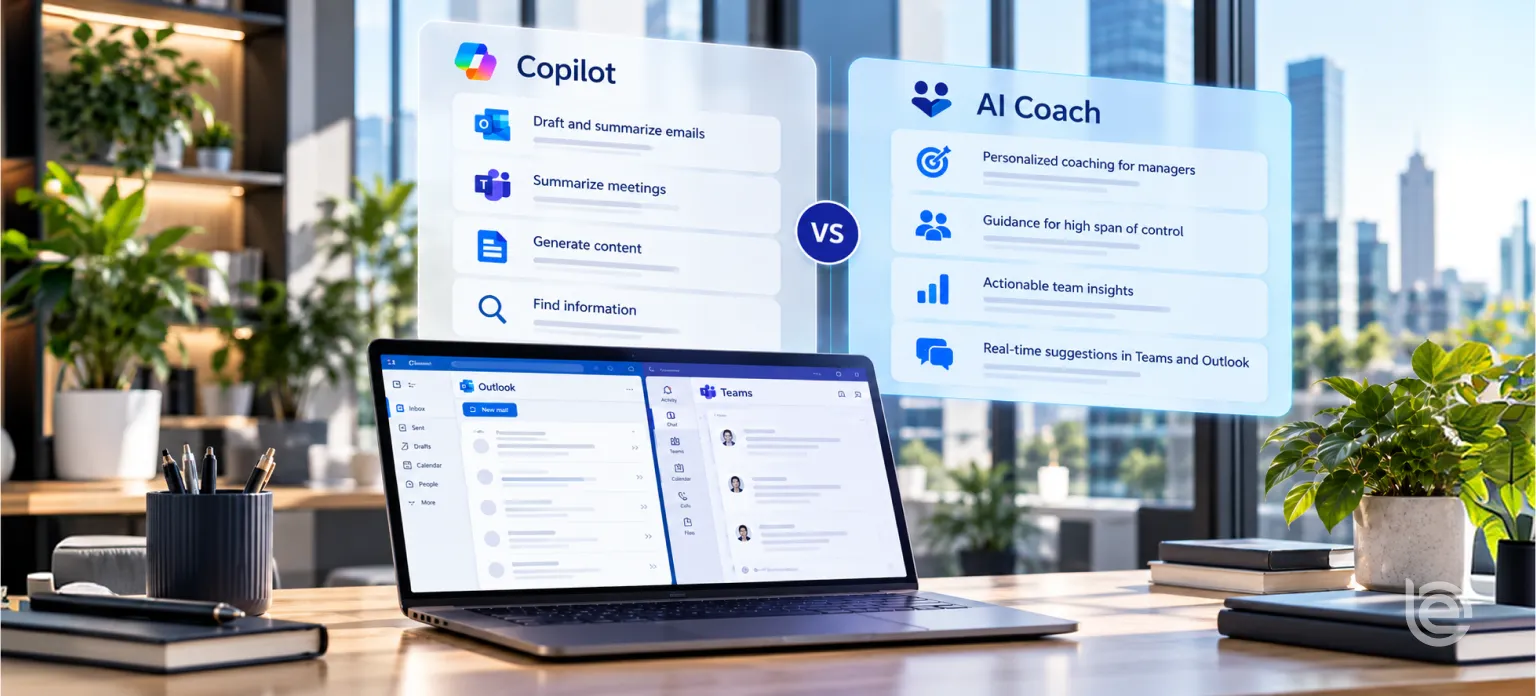
BullseyeEngagement’s AI Coach is designed to bring coaching into the flow of work. It helps managers lead with greater confidence and consistency by turning behaviors, motivators, and workforce energizers into practical coaching insights.
This matters because performance improves through better conversations. A system that records performance conversations is useful. A system that helps managers improve those conversations is far more valuable.
5. Competency Management
Goals tell employees what needs to be achieved.
Competencies help define how success should be demonstrated.
For mid-market companies, competency management creates consistency across roles, teams, and business units. It helps managers evaluate employees against clear skills, behaviors, and expectations instead of relying only on subjective judgment.
Strong competency management should help organizations:
- Define role-based competencies
- Assess employee capability
- Identify skill gaps
- Connect competencies to reviews
- Connect gaps to development plans
- Support talent and succession conversations
Competencies are especially useful when performance management needs to connect to employee development, promotion readiness, succession planning, and workforce planning.
Without competency data, development conversations can remain vague. With competency management, feedback becomes more specific and actionable.
6. Individual Development Plans
A performance review should not end with documentation. It should lead to action. That is why individual development plans are essential in performance management software. They help turn feedback into structured growth.
An effective development planning system should allow organizations to:
- Create development goals
- Assign growth actions
- Track milestones
- Connect development to competencies
- Link development to performance reviews
- Support manager follow-up
- Monitor progress over time
This is where performance management becomes talent development. Employees do not just want to know how they were evaluated. They want to know how they can grow. Development plans help make that path visible.
7. Employee Talent Profiles
Mid-market companies often struggle because employee data lives in too many places.
Performance history may sit in one file. Goals may be tracked in another system. Competencies may be stored separately. Development plans may be managed by individual managers. Feedback may be lost in email or meeting notes.
That makes it difficult to see the full picture. Employee Talent Profiles solve this by creating a centralized view of each employee’s performance, goals, competencies, development activity, feedback, and growth history.
A strong talent profile should help managers and leaders quickly understand:
- Current role and history
- Goals and progress
- Performance review history
- Competencies
- Development plans
- Feedback and check-ins
- Recognition
- Talent and readiness information
This kind of centralized profile helps reduce scattered data and improves decision-making.
It also helps HR and leaders connect performance management to broader talent intelligence.
8. Recognition and Social Collaboration
Performance management should not only focus on what needs improvement.
It should also recognize what is working.
Recognition helps employees feel seen, valued, and connected to the organization. When recognition is part of the performance experience, it reinforces the behaviors and contributions that matter.
Look for software that supports:
- Peer recognition
- Manager recognition
- Social collaboration
- Recognition visibility
- Connection to performance and culture
- A simple experience employees will actually use
Recognition is not a replacement for feedback or development. It is a critical part of building a stronger performance culture.
Employees who feel appreciated are more likely to stay engaged, contribute consistently, and connect their work to the organization’s larger purpose.
9. Dashboards and Analytics
Mid-market leaders need visibility.
They need to know whether performance conversations are happening, whether goals are aligned, whether reviews are complete, whether development is moving, and whether managers are following through.
A modern performance management system should provide dashboards and analytics that make this visible.
Important dashboard views may include:
- Review completion
- Goal progress
- Check-in activity
- Development plan progress
- Competency gaps
- Recognition activity
- Manager follow-through
- Performance trends
- Engagement or culture indicators
Dashboards help leaders move from anecdotal updates to real-time visibility. They also help HR spend less time assembling reports and more time helping the business act on what the data shows.
10. Fast Deployment and Practical Adoption
One of the biggest concerns for mid-market companies is implementation.
A powerful system loses value if it takes too long to deploy, requires too much complexity, or creates adoption problems for managers and employees.
Mid-market companies should ask:
- How long does deployment typically take?
- How much configuration is required?
- Can the system support our current process and future growth?
- Will managers actually use it?
- Is the interface simple enough for employees?
- What level of support is included?
- Can we start with the core system and add more later?
BullseyeEngagement’s Performance Management – Bundle is built for practical deployment, with implementation possible in 4–8 weeks depending on scope and configuration. That matters for organizations that need to modernize quickly without compromising structure.
Why Modularity Matters
Mid-market companies rarely need every HCM solution at once. They need a system that can meet them where they are today and grow with them over time. That is why modularity is important.
A modular performance management system lets organizations start with what they need and add capabilities as their needs evolve.
For example, an organization may start with:
- Goal Management
- Performance Reviews with 360s
- 1:1 Check-Ins
- AI Coach
- Development Plans
- Dashboards
Then later add solutions such as:
- Succession Planning with AI Advisor
- Compensation Planning
- Workforce Planning
- Executive Insights
- Engagement
- Talent Development
- Ethics Lifeline
This approach gives mid-market companies flexibility. They do not have to overbuy.
They do not have to rebuild later. They can create a performance foundation first, then expand into a broader talent intelligence system.
Performance Management Software vs. Performance Review Tools
One of the most important buying distinctions is the difference between a performance review tool and a performance management system. A performance review tool helps you run reviews. A performance management system helps you improve performance. The difference matters. A review tool may help with forms, ratings, reminders, and completion tracking. Those are useful, but they do not solve the full performance challenge.
A true performance management system connects:
- Goals
- Reviews
- Feedback
- Check-ins
- Coaching
- Competencies
- Development plans
- Recognition
- Talent profiles
- Dashboards
For mid-market companies, this distinction is critical. If your organization only needs compliance documentation, a review tool may be enough.
But if you want better alignment, stronger managers, continuous feedback, employee growth, and leadership visibility, you need a connected performance management system.
Questions to Ask Before Buying Performance Management Software
Before choosing a system, HR and talent leaders should ask practical questions.
Strategy and Alignment
- Can the system connect goals to business priorities?
- Does it support OKRs if we use them?
- Can leaders see goal progress across teams?
Performance Reviews
- Can review templates be configured?
- Does it support 360 feedback?
- Can workflows, reminders, and approvals be automated?
- Can we access review history easily?
Continuous Feedback
- Does the system support regular 1:1 check-ins?
- Can feedback be captured throughout the year?
- Does it help managers follow up?
Coaching and Manager Support
- Does the platform support managers in the moment?
- Does it include AI coaching?
- Does coaching connect to feedback, communication, and development conversations?
Development
- Can reviews connect to development plans?
- Can competencies be measured?
- Can employee growth be tracked over time?
Analytics
- What dashboards are available?
- Can leaders see performance activity and progress?
- Can HR reduce manual reporting?
Scalability
- Can the system support 500+ employees?
- Can it support multiple teams, entities, or business units?
- Is it modular enough to grow with us?
Implementation
- How long does deployment take?
- How much configuration is required?
- What support is provided?
- How quickly can managers and employees adopt it?
These questions help move the buying conversation beyond features and toward business value.
How BullseyeEngagement Supports Mid-Market Performance Management
BullseyeEngagement’s Performance Management – Bundle brings the essential pieces of modern performance management into one connected solution.
It includes:
- Goal Management, with OKRs also available
- Performance Reviews with 360s
- 1:1s – Check-Ins
- Competency Management
- Individual Development Plans
- Employee Talent Profiles
- AI Coach
- Team Align
- Social Collaboration – Recognition
- Dashboard & Analytics
The bundle is designed for companies and entities with more than 500 employees that need a practical first system of talent intelligence.
It helps organizations create:
- Stronger alignment with business priorities
- More consistent feedback and coaching
- Better manager effectiveness
- Clearer employee growth and development
- Improved engagement and recognition
- Reduced administrative burden
- Real-time leadership visibility
- A culture of continuous feedback and development
What makes BullseyeEngagement different is that it brings digital coaching directly into the performance experience.
AI Coach supports the moments that matter most: feedback, performance conversations, development discussions, and team communication.
That means managers are not just asked to coach better.
They are supported while doing it.
BullseyeEngagement is also modular, so organizations can begin with performance management and expand into Succession Planning with AI Advisor, Workforce Planning, Compensation Planning, Engagement, Talent Development, Ethics Lifeline, Executive Insights, and more.
Common Mistakes to Avoid When Choosing Performance Management Software
Choosing the wrong system can create more problems than it solves.
Here are common mistakes mid-market companies should avoid.
Mistake 1: Buying Only for the Annual Review Cycle
If the system only helps you complete annual reviews, it may not support continuous performance management.
Look for a solution that supports goals, check-ins, coaching, development, recognition, and analytics throughout the year.
Mistake 2: Ignoring Manager Adoption
Managers are the delivery system for performance management.
If the software is difficult to use or does not help managers have better conversations, adoption will suffer.
The best systems make the manager’s job easier, not heavier.
Mistake 3: Separating Performance From Development
Performance management should help employees grow.
If reviews are not connected to competencies, development plans, and growth actions, the process will feel incomplete.
Mistake 4: Overlooking Coaching Support
Many systems track performance activity.
Fewer systems help managers improve the quality of conversations.
AI coaching is valuable because it supports managers in real time, where feedback and development actually happen.
Mistake 5: Choosing a System That Cannot Grow With You
Mid-market companies need flexibility.
A system should support today’s priorities and allow the organization to add more capabilities as needs evolve.
That is why modularity matters.
FAQs
1. What is performance management software?
Performance management software helps organizations manage goals, reviews, feedback, check-ins, development plans, competencies, recognition, and performance analytics in a structured system.
2. What should mid-market companies look for in performance management software?
Mid-market companies should look for goal management, performance reviews with 360s, 1:1 check-ins, competency management, development plans, employee talent profiles, AI coaching, recognition, dashboards, and modular add-on capabilities.
3. Why are annual reviews not enough?
Annual reviews are too infrequent to support continuous performance improvement. Employees need regular feedback, check-ins, coaching, recognition, and development conversations throughout the year.
4. How does AI coaching improve performance management?
AI coaching helps managers prepare for feedback, performance conversations, development discussions, and team communication. It supports better manager effectiveness and more consistent employee experiences.
5. Why is performance management important for mid-market companies?
Mid-market companies need structure and consistency as they grow. Performance management software helps align goals, improve feedback, develop employees, support managers, and give leaders visibility into performance trends.
6. What is the difference between a performance review tool and performance management software?
A performance review tool mainly supports formal reviews. Performance management software connects reviews with goals, feedback, coaching, development plans, competencies, recognition, and analytics.
7. How long does performance management software implementation take?
Implementation timelines vary by platform and scope. BullseyeEngagement’s Performance Management – Bundle can be deployed in approximately 4–8 weeks depending on configuration and organizational needs.
8. Can performance management software support talent intelligence?
Yes. When performance data is connected with goals, development, competencies, coaching, recognition, dashboards, and future add-ons like AI Advisor, it becomes part of a broader talent intelligence system.
Ready to Choose Performance Management Software That Can Grow With You?
Mid-market companies need more than a basic review tool.
They need a connected performance management system that supports goals, reviews, check-ins, coaching, development, recognition, and analytics in one place.
BullseyeEngagement’s Performance Management – Bundle helps organizations move beyond manual reviews, disconnected goals, and inconsistent feedback to build a culture of alignment, coaching, and continuous growth.
With AI Coach embedded into the performance experience, managers receive real-time guidance in the moments that matter.
And with modular add-ons like Succession Planning with AI Advisor, Workforce Planning, Compensation Planning, Engagement, Talent Development, and Executive Insights, BullseyeEngagement gives mid-market companies a practical foundation for talent intelligence.